
installations :: photographs :: videos/sounds :: sculpture :: residencies :: editions :: texts :: bio :: contact:: home
bio
> CV complet version PDF
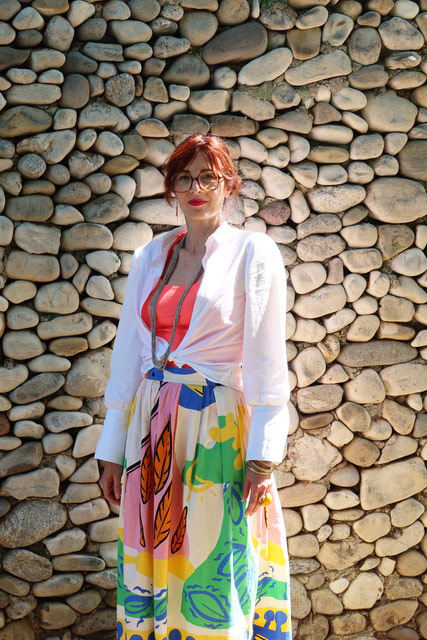
Vit et travaille entre Beaulieu-sur-mer (06) et Paris
Barbara Noiret développe une œuvre transdisciplinaire qui envisage l’écologie comme une expérience à la fois sensible, politique et relationnelle. Artiste, réalisatrice et scénographe, elle explore les liens entre crise écologique, transformations des paysages et systèmes de domination, en portant une attention particulière aux récits invisibilisés et aux voix de communautés minorisées ou fragilisées. Son travail associe cinéma, vidéo, photographie, musique, chant lyrique, performance, sciences sociales et sciences naturelles, afin de questionner nos manières d’habiter le monde, de percevoir le vivant et de transmettre des récits face aux bouleversements contemporains. Ses projets prennent souvent naissance dans des contextes spécifiques — territoires, institutions, paysages ou communautés — à travers des résidences de création, des commandes in situ et des démarches collaboratives. Elle développe ainsi des formes où l’expérience collective devient un outil de recherche, révélant les mémoires enfouies des lieux et les relations complexes entre humains et milieux vivants. Ses œuvres explorent les imaginaires sociétaux et écologiques en associant souvent habitants, chercheurs, artistes et publics à leur élaboration.
Son travail a été présenté en France et à l’international, notamment au Centre d’art de Kalamaria et au Muséum d’Histoire naturelle d’Héraklion (Grèce), au Centre culturel français d’Izmir (Turquie), à l’Institut franco-japonais de Yokohama (Japon), au Musée Jean-Honoré Fragonard de Grasse, au Musée de l’Assistance Publique – Hôpitaux de Paris, ainsi que dans des centres d’art et lieux patrimoniaux tels que Le Quartier à Quimper, l’Espace Croisé à Roubaix, le Domaine de Kerguéhennec, le Domaine départemental de Chamarande ou le Palais de l’Archevêché à Arles. Ses œuvres ont intégré des collections publiques, notamment le Fonds national d’art contemporain, ainsi que des collections privées.
Ses films, régulièrement présentés dans des festivals internationaux, prolongent cette recherche autour des enjeux écologiques et des récits contemporains. Le dernier matin du monde (2021), réunissant experts scientifiques, chercheurs et citoyens autour de la crise environnementale, a reçu entre 2025 et 2026 trois distinctions, dont le prix du Meilleur film européen, et cinq sélections officielles internationales, notamment à New York, Dhaka, Londres, Berlin et Neum.
En juillet 2026, elle réalise un projet dans les jardins de la Villa Arson dans le cadre de l’École d’été, invitant les participant·es à développer une attention au vivant à travers respiration, voix, dessin, aquarelle, performance, lecture et création vidéo. La même année, son film L’Esprit Chagall est projeté à l’auditorium du Musée national Marc Chagall. En 2025, elle participe à l’exposition L’Esprit des lieux, consacrée à la collection du FDAC de l’Essonne. En résidence au Musée départemental Albert-Kahn en 2024, elle mène une recherche sur la disparition du paysage en dialogue avec les premiers autochromes et 50 élèves d’une école primaire.
Depuis dix ans, Barbara Noiret développe également une pratique de mise en scène et de scénographie pour le spectacle vivant et les projets immersifs. Elle prépare actuellement, avec le directeur musical Jérôme Polack, la création d’un concert immersif consacré à l’urgence climatique, prévu pour 2027-2028.
Parallèlement à sa pratique artistique, elle enseigne à l’Université Côte d’Azur depuis 2024 et à l’Université Paris 8 Vincennes–Saint-Denis depuis 2013. Elle a également enseigné à la Sorbonne Nouvelle – Paris 3 (2015-2025) en arts plastiques, cinéma, arts du spectacle et médiation culturelle.
english version
Lives and works between Beaulieu-sur-Mer (French Riviera) and Paris
Barbara Noiret develops a transdisciplinary practice that approaches ecology as a sensory, political, and relational experience. An artist, filmmaker, and exhibition designer, she explores the connections between the ecological crisis, landscape transformations, and systems of domination, paying particular attention to marginalized narratives and the voices of underrepresented or vulnerable communities. Her work brings together film, video, photography, music, operatic singing, performance, social sciences, and natural sciences to question how we inhabit the world, perceive living systems, and transmit stories in the face of contemporary upheavals. Her projects often emerge from specific contexts—territories, institutions, landscapes, or communities—through artistic residencies, site-specific commissions, and collaborative processes. She develops participatory forms in which collective experience becomes a research tool, revealing the hidden memories of places and the complex relationships between humans and living environments. Her works explore social and ecological imaginaries, frequently involving local residents, researchers, artists, and audiences in their development.
Her work has been presented in France and internationally, including at the Kalamaria Centre for Contemporary Art and the Natural History Museum of Heraklion (Greece), the French Cultural Centre in Izmir (Turkey), the French Institute of Yokohama (Japan), the Jean-Honoré Fragonard Museum in Grasse, the Museum of the Assistance Publique–Hôpitaux de Paris, as well as at art centres and heritage sites such as Le Quartier in Quimper, Espace Croisé in Roubaix, Domaine de Kerguéhennec, Domaine départemental de Chamarande, and the Palais de l'Archevêché in Arles. Her works have entered both public collections, including the French National Contemporary Art Collection (FNAC), and private collections.
Her films, regularly screened at international festivals, extend this research into ecological issues and contemporary narratives. *The Last Morning of the World* (2021), which brings together scientists, researchers, and citizens to reflect on the environmental crisis, received three awards between 2025 and 2026, including **Best European Film**, and was officially selected by five international festivals, notably in New York, Dhaka, London, Berlin, and Neum.
In July 2026, she created a project in the gardens of Villa Arson as part of the Summer School, inviting participants to cultivate an awareness of the living world through breathing, voice, drawing, watercolour, performance, reading, and video creation. That same year, her film *The Spirit of Chagall* was screened at the auditorium of the Marc Chagall National Museum. In 2025, she took part in the exhibition *The Spirit of Places*, dedicated to the FDAC Essonne collection. During a residency at the Albert-Kahn Departmental Museum in 2024, she conducted research on the disappearance of landscapes through a dialogue with the museum's early autochromes and fifty primary school pupils.
For the past ten years, Barbara Noiret has also developed a practice in stage direction and exhibition design for live performance and immersive projects. She is currently preparing, together with musical director Jérôme Polack, an immersive concert on the climate emergency, scheduled for 2027–2028.
Alongside her artistic practice, she has been teaching at Université Côte d'Azur since 2024 and at Paris 8 University Vincennes–Saint-Denis since 2013. She also taught at Sorbonne Nouvelle University (Paris 3) from 2015 to 2025 in the fields of visual arts, cinema, performing arts, and cultural mediation.